A Founder's Note from CoAgentic Dev — a periodic dispatch on what we're building, why, and what we've learned.
We haven't published much since September. That's not because nothing happened — it's because most of what happened was shipping.
This is the first of what I intend to make a periodic Founder's Note: a dispatch on what we're building at CoAgentic Dev, why we chose it, and what we got wrong along the way. It is not a press release. There is no announcement at the bottom of it.
The short version of Q4 so far: we entered OKX Dev Day 2026 on the remote track, publicly said we weren't flying to the Singapore finale, became a finalist, and then flew to the Singapore finale. What we found in that room did not match what I'd written about it three weeks earlier. That gap is the most useful thing I have to report this quarter.
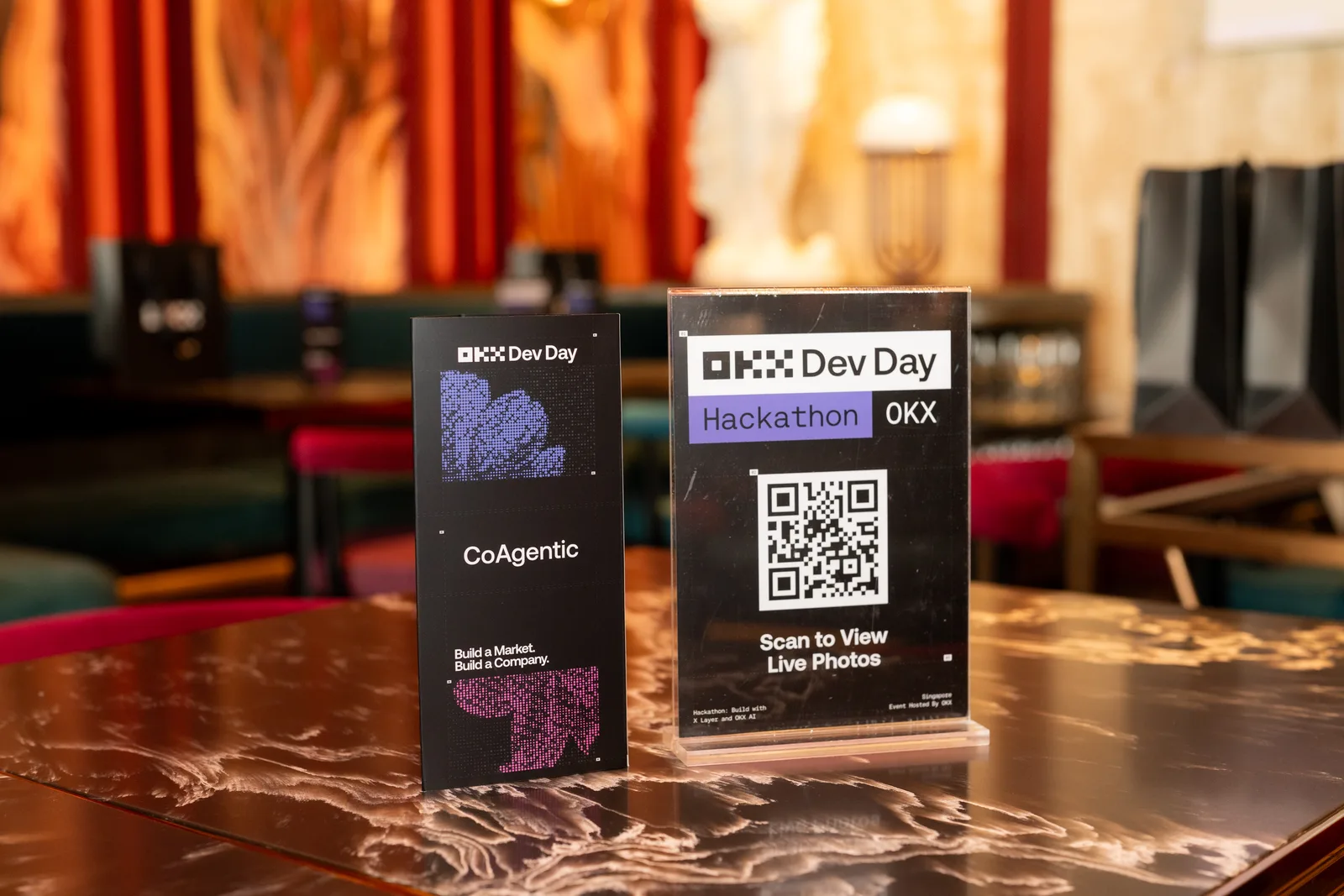 CoAgentic at OKX Dev Day 2026, Singapore — Build a Market. Build a Company.
What we said before we went
On 17 September I posted a fairly cold read of the week ahead. Dev Day's build phase ran online from 17–25 September, with the purse and the stage sitting at the 7 October finale in Singapore — the same week as TOKEN2049 and the Singapore Grand Prix. Dev Day had originally been scheduled for 6 October; it moved to the 7th, the day after OKX Now — OKX's own conference day during TOKEN2049 week. My framing then:
Flagship week in Singapore is not a developer conference that happens to have parties. It is a corporate social week that happens to have a hackathon sticker on it.
I also argued that in-person attendance "is a filter, not a merit list" — that short notice, Formula One hotel pricing and visa letters select for people who can appear, and that "a quiet remote repo looks unfinished even when it isn't." I closed on: "Remote ships. In-person networks."
I stand by about half of that. The half I got wrong is the half that matters, so I'd rather write it down than quietly let it go.
What Dev Day actually was
Dev Day ran two build tracks: Build a Market on X Layer for tokenized stocks and real-world assets, and Build a Company on OKX AI for agent services and AI-native businesses. The prize pool was up to US$100,000, split across Build a Market ($35K), Build a Company ($35K), a Flash Track ($15K) and Remote Build ($15K).
The part that set the tone was the entry requirement. Every submission needed a working product — a live deployment or test environment, plus a two-to-four-minute video of the thing actually running. Judging weighted product completeness and "meaningful integration with X Layer and/or OKX AI" above narrative. You could not slide through on a deck.
That requirement is the whole contrast with the surrounding week. TOKEN2049 ran 7–8 October at Marina Bay Sands with more than 25,000 attendees, 500 exhibitors and over a thousand side events, with OKX as title sponsor. It is a genuinely impressive piece of industry infrastructure, and it is built for a buyer: executives, allocators, marketing teams. Dev Day was not that. It was a much smaller room where the admission ticket was a build.
We brought CoAgentic Markets and submitted under Build a Market: Steward, a live portfolio on X Layer. Eight holdings — six tokenized stocks (SPCXx, NVDAx, TSLAx, CRCLx, AAPLx, MSTRx) plus ETH and OKB — each at a target weight. It only buys a stock token while that token is priced within 1% of the real share, and it stops buying around scheduled market events.
The parts each do one job. Sentinel watches macro and publishes a falsifiable macro view. The Tradability Oracle scores whether each token can actually be traded — liquidity, the price gap to the real share, whether the stock market is even open. A price check compares each token against the real share. Bull, Bear and Risk agents argue the case; that argument is the Council. A deterministic gate then returns hold, defer or approve, including the freeze around scheduled market events. The gate checks turnover, concentration and macro-event windows — small rebalances are held until they reach a meaningful threshold. And a human authorizes every trade. The short version: a Council surfaces research and signals, a rule checks the conditions, and a human authorizes.
That was running on screen at the finale, not described on a slide. Ten days on from the finale, the record stands at 13 on-chain fills, each verified — 11 on X Layer, 2 on Solana. Three scheduled market events were waited through without buying. It is a live book with real capital. Execution is human-authorized and agent-operated: the automated executor is still in dry-run, and every leg was authorized by a person before it moved. Research hashes are reproducible and selected research snapshots are anchored on X Layer testnet — not every decision, just the snapshots — while the live trades carry a verified on-chain execution record on mainnet.
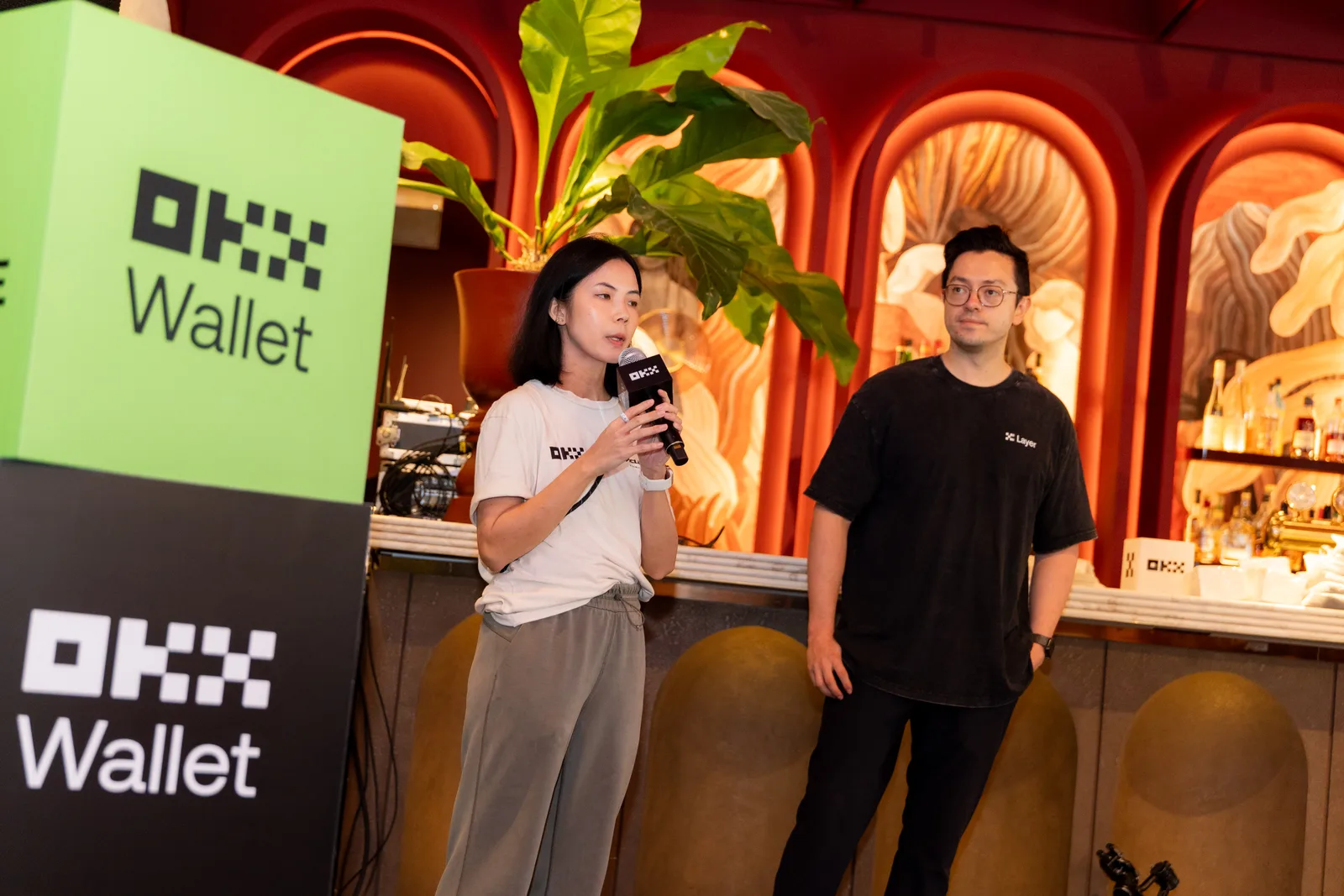 The OKX team hosting on the day.
On the day
The format was deliberately unglamorous. Teams drew numbers for speaking order. Pitches were short — minutes, not sessions — and ran across two physical tracks, one inside and one outside, which meant you were often presenting to a handful of judges and a few other builders rather than to a crowd. OKX, judges and VCs were in the room, less to be impressed than to argue about the thesis.
Then came the Flash Track, which turned out to be the most generative part of the day. On the day, teams had to find a genuine technical synergy with another team and present a combined concept. Not a merger, not a logo slide — an actual answer to "what could your thing and their thing do together that neither does alone," arrived at in hours.
That one mechanic did more for our network than a week of side events would have. It forced specificity: you cannot find a synergy with someone whose architecture you haven't understood, so the conversation starts at interfaces and data models instead of traction and raises.
The other thing that happened was personal: I ran into a developer I had worked alongside years ago and hadn't seen since before COVID. We had both, independently, spent the years since walking from crypto-native work into agent systems. I won't narrate that further here — it isn't mine alone to tell — but it reframed the trip. That conversation does not happen over a livestream.
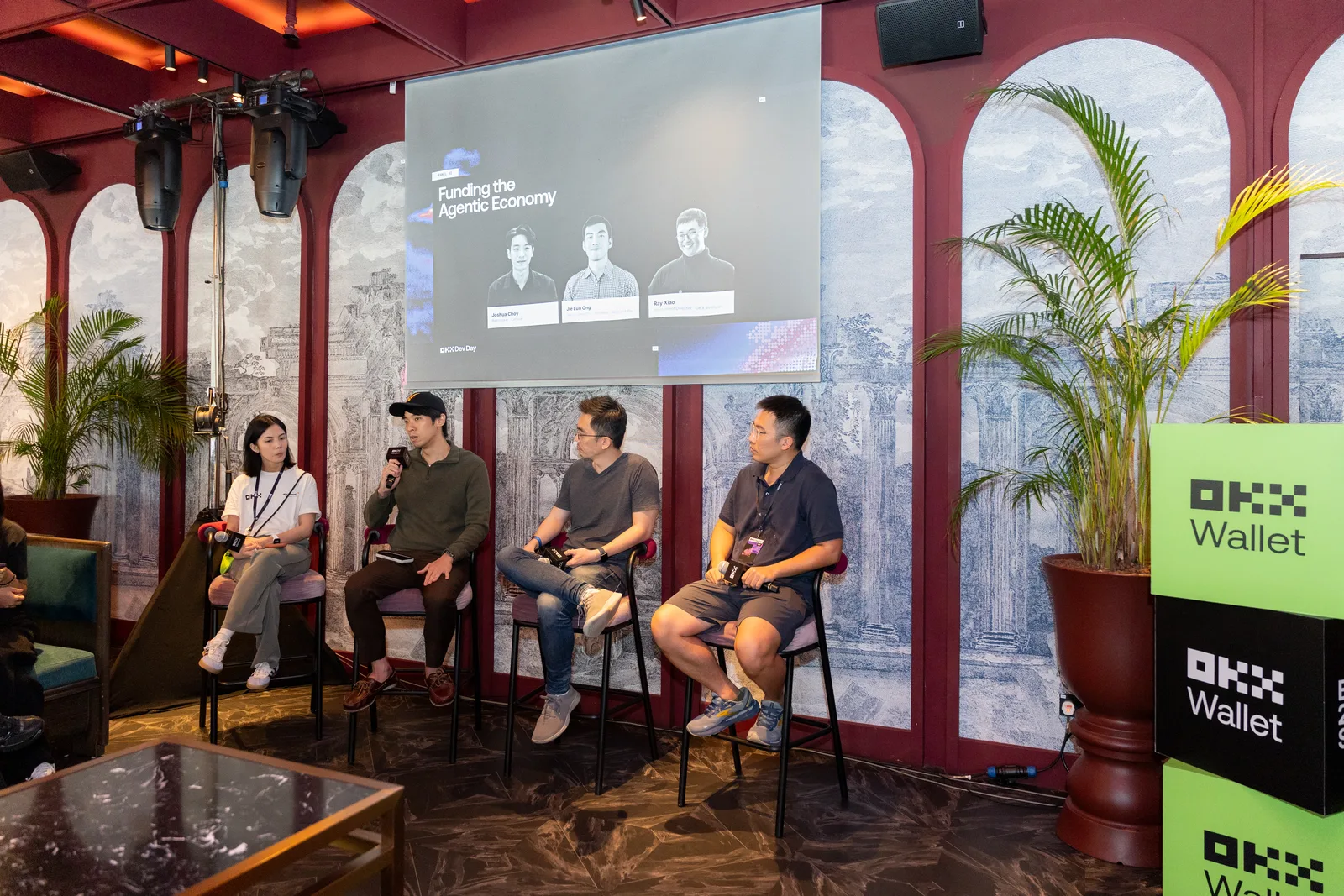 The Funding the Agentic Economy panel, OKX Dev Day Singapore 2026.
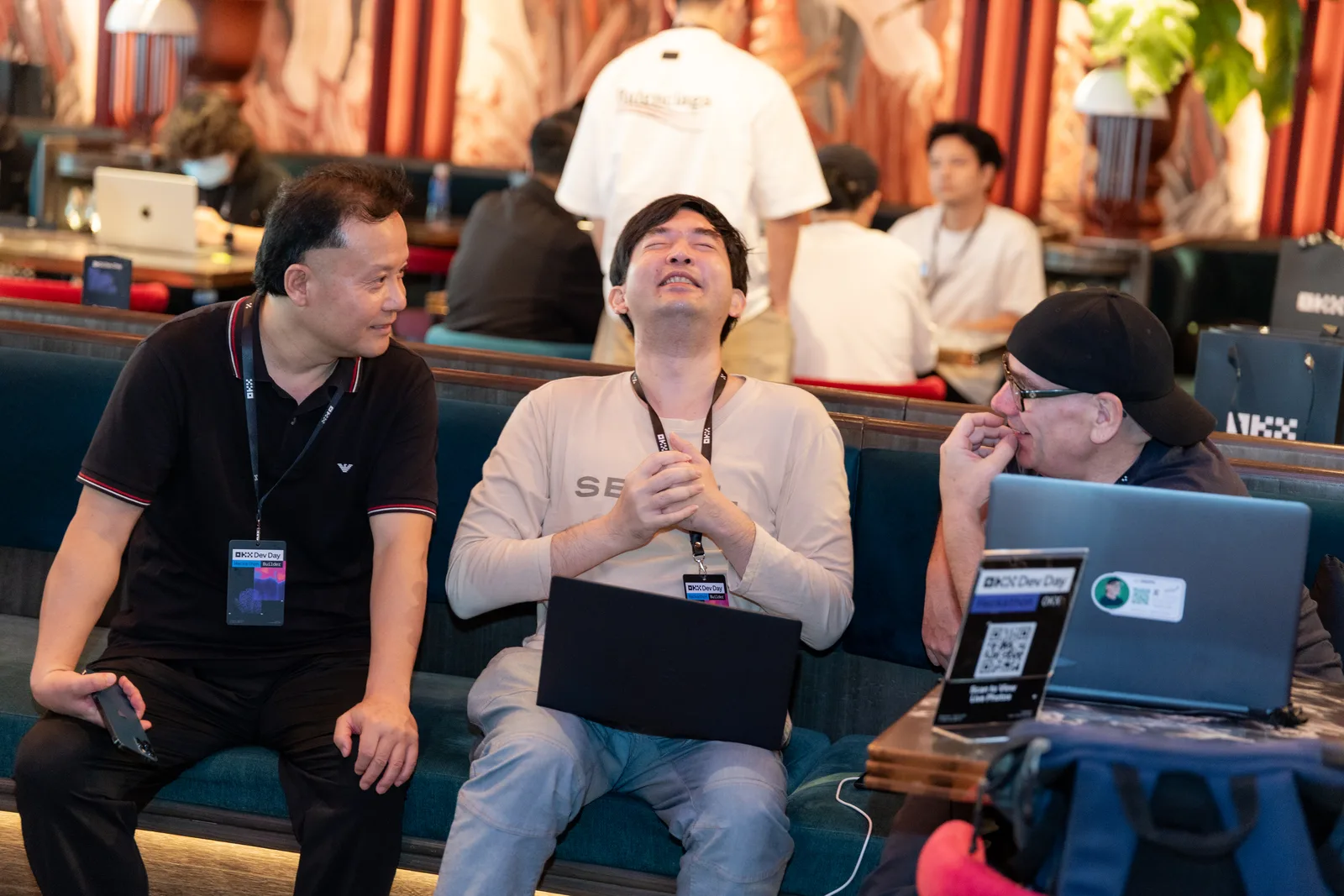 Builder conversations between pitches — the signal that makes Dev Day worth the trip.
The Flash Track collaborations
Two pairings stood out, and they map the two halves of what we're building.
On the Flash Track we were paired with LingoAI, who were presenting Holon — their personal-ontology system that keeps a user's data, constraints, and history under permissioned, logged control. One direction we explored was an AI agent that could help rebalance a portfolio by drawing on data from CoAgentic Markets — positions, tradability scores, and rule outputs — and then checking or grounding that proposal against a limited slice of the user's Holon context. The idea was that Holon could act as a verification or constraint layer rather than the sole source of market data. The conversation stayed high-level; we did not define a concrete data flow, permission model, or shared interface during the session.
With Tamago Labs, who were presenting Xray, we looked at a possible split between deeper per-asset research and an explicit tradability gate — Xray surfacing the research, CoAgentic Markets providing the go/no-go.
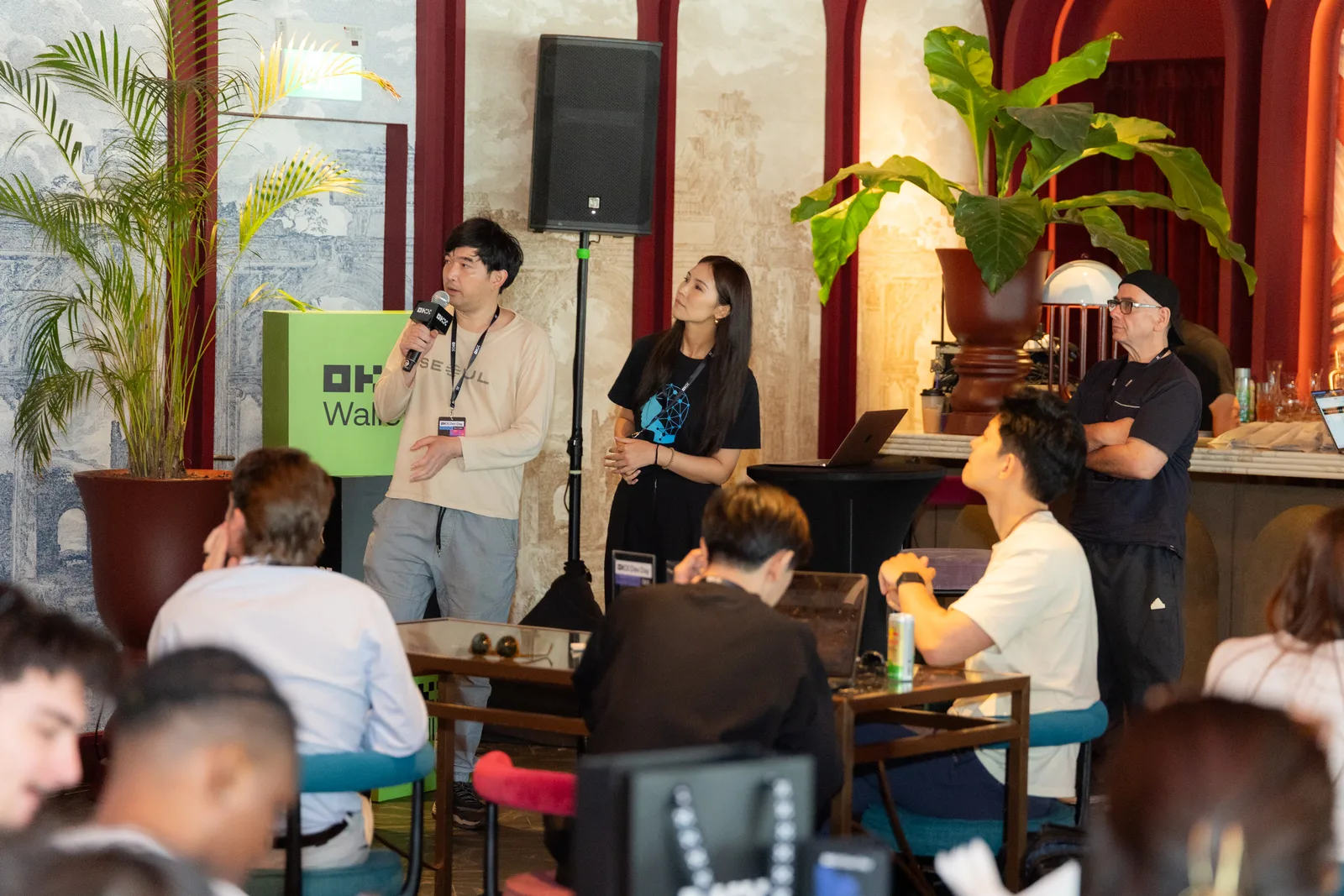 Teams presenting during the Flash collaboration track.
What came next
The most concrete post-event outcome wasn't a product split so much as a second interface on the same engine. A decision state shouldn't need a page of text to read. app.catfooding.com started on 22 September as a client of the CoAgentic feed — a mascot that eats Markets data and refuses bad food, built to show the engine feeding another agent rather than just reporting to us. At the finale we presented it as exactly that. It is now its own project, co-founded with a collaborator who leads brand, product experience and Manekotchi, the AI cat trading companion.
It is, deliberately, not a dashboard. You raise a cat; the cat hunts the tokenized stock book on X Layer; its mood, health and hunger are the agent's state made visceral. Since 10 October the same issuer and the same rules also trade on Solana — the first live trades there were ETH and SOL. Enabling a different chain is a toggle; it is one way we intend to scale across chains. Underneath are the unglamorous parts: four personality archetypes that change risk behaviour, a memory that carries past trades forward, a deterministic risk engine, and trade explanations in both narrative and numerical form. Live mode shows real engine verdicts, read-only; demo mode simulates.
It exists because a portfolio that can refuse its own trades is hard to explain and easy to show.
The engine underneath keeps its own record. As of 17 October 2026, the Council has published a daily report every day since 8 August — 71 so far. Since 3 September the rules gate has checked the Steward book about 2,100 times, answering approve 923 times, hold 692 times and defer 481 times. An approve means the plan passed the rules; trades only happen when a human authorizes them.
On coverage, CoAgentic Markets compares six stocks across four chains — X Layer, Solana, Ethereum and Robinhood Chain. As of 9 October 2026, the issuer check had found 38 genuine tokens and 61 look-alikes copying their names — this is an issuer-level check, not a liquidity ranking.
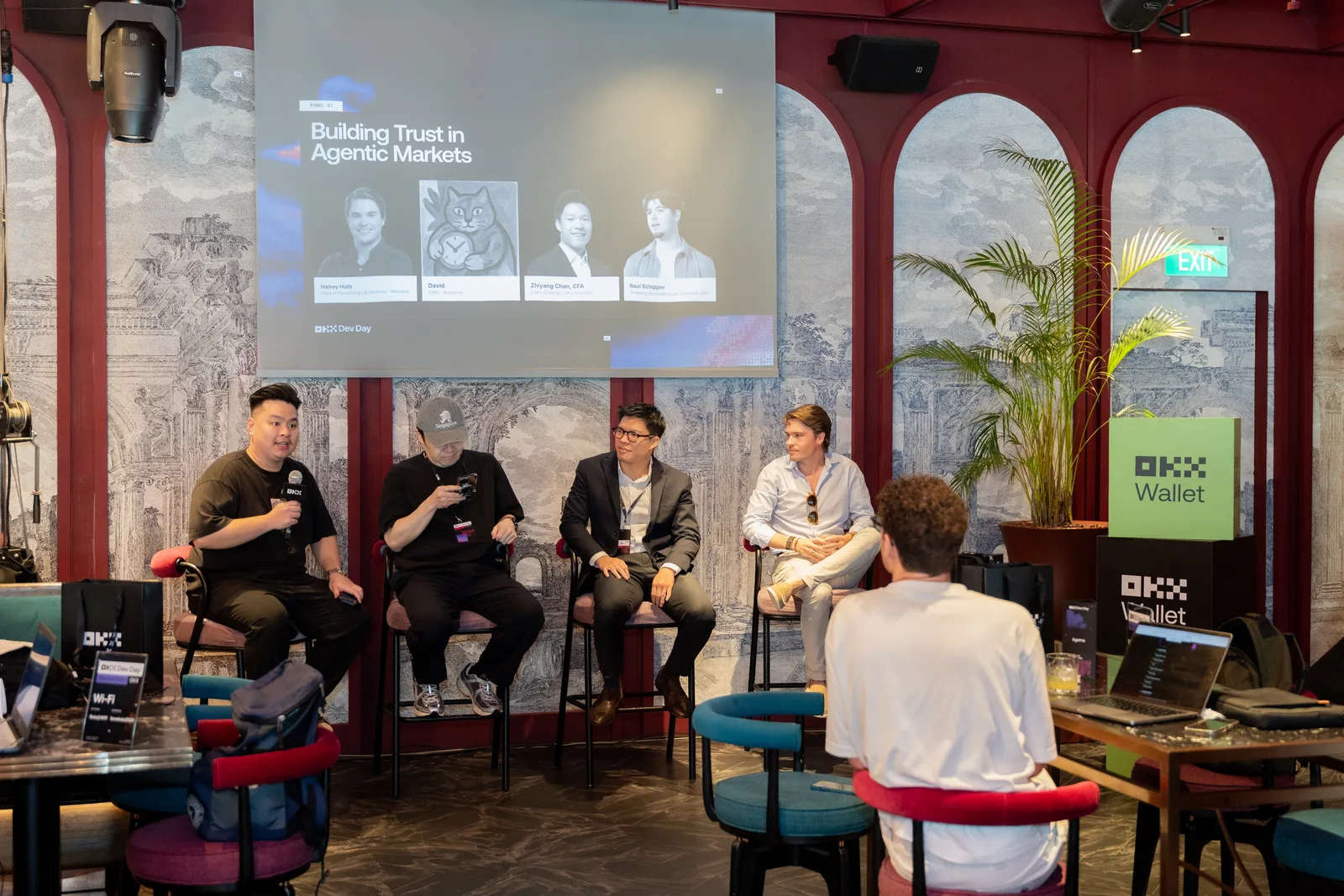 The Building Trust in Agentic Markets panel, OKX Dev Day Singapore 2026.
Listed is not the same as durable
All three CoAgentic agents passed OKX.AI's listing review and went live: Markets (#3650) since July, for the OKX.AI Genesis Hackathon; Council (#10572) since August; Steward (#12856) since September, during the Dev Day build.
Later listing reviews delisted all three in September: Markets on 7 September, Council on 26 September, Steward on 27 September. None was listed at the Dev Day finale.
Markets: relisting needs two changes. First, payment verification moves to OKX's official payment SDK, now in security review before deployment. Second, the Pine Script Executor checked a buyer's inputs only after payment was signed. That was our fault — a bad request should be refused before anyone pays — and it is now fixed and live.
Council and Steward: OKX did not receive signals from their subscription services within the required time. We resubmitted several times — updated tools, six-hourly signals, plain text, a service guide — and got the same rejection each time. We have asked the OKX.AI team to clarify what the liveness test requires.
Our working explanation — not confirmed by OKX, and we keep it framed as ours — is that the marketplace appears to expect an AI client beside each agent, reading and answering OKX's messages. We deliberately don't run one on the server holding the trading wallet: an AI that can read files and send messages beside a wallet is a path to leaked keys.
Each agent's current status is on the CoAgentic Markets site, and we'll relist once the requirements are confirmed.
Getting listed is a launch; staying listed is operations. The Markets fixes are ordinary engineering and ours to do. The Council and Steward case is more interesting: what a marketplace needs to see an agent as alive can pull against what keeps that agent safe — the question this note keeps returning to, whether an agent can be stopped, seen from the other side. Meanwhile research, signals and on-chain records still publish, and the Markets gateway is still callable directly over x402.
Marketplaces for agents are early, and the first version of each checks the easy things: is the agent there, did it answer. The durable version has to check what matters to the people relying on it: is it still running, is it doing what it said, and can that be proved without handing the marketplace, or an AI, the keys.
We expect two things to become standard, and are building toward both:
- Liveness an agent can prove without exposing its keys — signed heartbeats, in place of an always-on chat client.
- A track record anyone can check: decisions and trades recorded where they can be verified, so an agent's history goes with it from one marketplace to the next.
Our agents' value should sit in what they can prove, not in which marketplace lists them.
The bigger frame
I've now lived through three of these transitions, and they rhyme more than they repeat.
The early internet rewarded people who shipped ugly things that worked. Early web3 rewarded people who ran infrastructure before there was a reason to. Agentic systems are at the stage where the work looks trivial from outside and is mostly plumbing from inside — permissions, identity, payment rails, and the unsexy question of what an agent may do when it's wrong.
The analogy I keep returning to is early Ethereum — mining blocks that felt almost hobbyist, then the slow realisation that smart contracts could programme money itself, and then DeFi as the first wave of autonomous financial logic running without human intermediaries. Each stage looked unremarkable from the inside until it didn't. Autonomous AI agents executing trading strategies on-chain, with human authorization at every step, feel like that same early moment: the activity is modest, the tooling is rough, but the primitive is real. I could be wrong about the timeline. I don't think I'm wrong about the direction.
The thing I'd flag to other builders is that the hard problem has quietly moved. It is no longer "can an agent decide." It's "can an agent be stopped." That's why the gate, not the Council, is the piece I'm proudest of — the Council surfaces research and signals for the human to consider; the rule checks whether the conditions are met; and a human authorizes every trade.
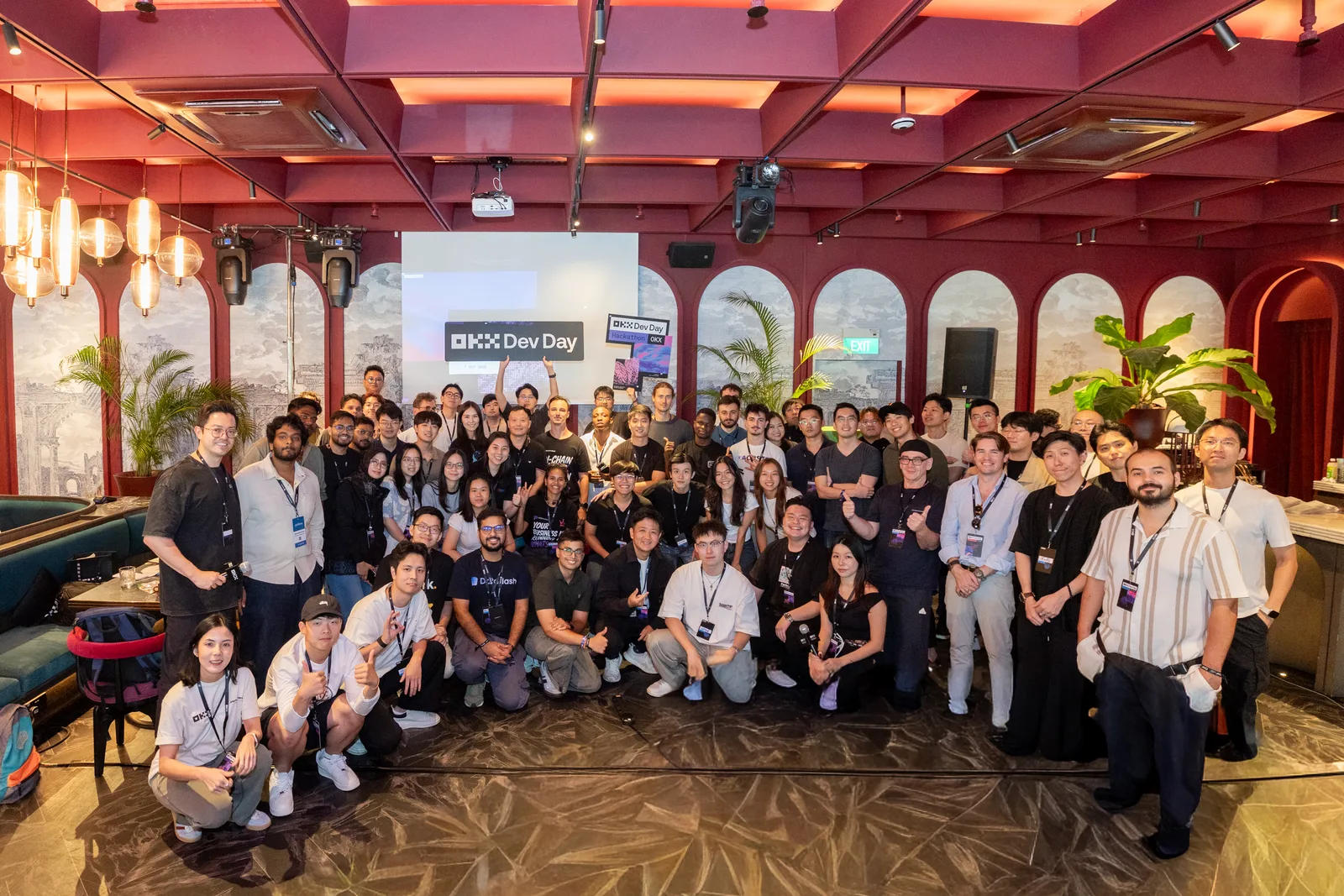 The full OKX Dev Day 2026 Singapore cohort.
Where this goes
We're heading into Q4 and, not far behind it, year one. The work in front of us is narrower than the work behind us: harden the gating layer, get catfooding in front of people who didn't build it, and keep the Markets engine honest about what it can and can't see.
I won't promise shipping dates here. The pre-event note above is a decent reminder of how confidently I can be wrong three weeks out. But the Notes will keep coming, roughly quarterly, including the parts that don't work.
If you're building in this area — particularly on tradability, agent permissions, or tokenized equity infrastructure — I'd rather hear from you than from the market.
— JC, CoAgentic Dev. Corrections and verifiable additions via the CoAgentic contact page.